AI Want to work smarter with AI? See how Agentforce fits your business.

Get Started

Clari Salesforce Integration

Clari needs governance fixes. Folio3 CRM solves it first.

Stop managing forecasts outside your Salesforce pipeline. Unify opportunity data, forecast signals, and revenue visibility inside Salesforce. Sync in real-time, eliminate manual exports, and forecast with confidence.

Common Clari Salesforce Integration Challenges and How We Solve Them

Forecast Drift Risk

Challenges

Salesforce stages change daily. Forecast calls rely on stale data. Clari can't flag risk before shifts occur.

Solution

  • Sync the opportunity stage, amount, and close date to Clari
  • Highlight recent field changes inside forecast views
  • Route risk signals to forecast reviewers daily
  • Reduce spreadsheet exports with live pipeline data

Activity Blindspots

Challenges

uyer conversations happen in email and meetings. Salesforce often misses activity logs linking to deals.

Solution

  • Capture emails and meetings as Salesforce activities
  • Associate activities to opportunities using matching rules
  • Use Clari activity signals in inspection views
  • Audit missing logs with weekly reports quickly

Custom Field Sprawl

Challenges

Teams add custom opportunity fields in Salesforce. Clari users can't see them in forecast grids daily.

Solution

  • Select required Salesforce fields for Clari layouts
  • Control field order for faster reviews today
  • Map custom fields with clear data types
  • Limit writeback to approved fields only always

Ownership Confusion

Challenges

Reps edit deals in Clari. Admins enforce Salesforce validation. Writeback conflicts create daily exceptions.

Solution

  • Define read-only versus writeback fields early
  • Use a dedicated Salesforce integration user account
  • Respect Salesforce validation and required fields rules
  • Log sync errors for quick troubleshooting work

Bring clarity to revenue calls with Clari Salesforce integration

What you Gain from Clari Salesforce Integration

Cleaner Forecast Meetings

Forecast calls start with the same opportunity numbers from Salesforce. Clari flags have changed since last review. Leaders focus on decisions, not data debates.

Faster Deal Inspection

Reps see stage history, activity signals, and notes beside opportunities. Managers spot stalled deals earlier and coach more strategically.

Consistent Field Visibility

Custom Salesforce fields appear in Clari views your team uses daily. Reviews include qualification data without switching tabs.

Fewer Sync Exceptions

Writeback follows Salesforce rules. Required fields stay valid. When updates fail, Clari records the reason for quick resolution.

Teams That Benefit from Clari Salesforce Data Sharing

Sales leaders defend forecasts with Salesforce pipeline data. RevOps controls field governance. Finance plans with confidence. Sales managers spot deal risks early. Reps spend less time on data work.

Driving Change for Growing Companies with Salesforce Services

Majorkey

We used Folio3 over the last 3+ years for many projects, including org merges, complicated workflows and enhancements. Folio3 is was very detailed in the work. They are experts. They can explain complicated tasks so even the novice in the room can understand. Appropriate and reasonable timelines are assigned so that there are no issues with any tasks for transition. The project closed without any hang ups or hold ups and we continue to do enhancements on the application with Folio3.

testimonial-sunhero-logo

Sunhero

Folio3 did a great job in scoping the request and keeping communication going throughout the task
This was a very ambiguous request and they managed to troubleshoot the issue and explore different options. I would hire them again

How Clari and Salesforce Integration Works

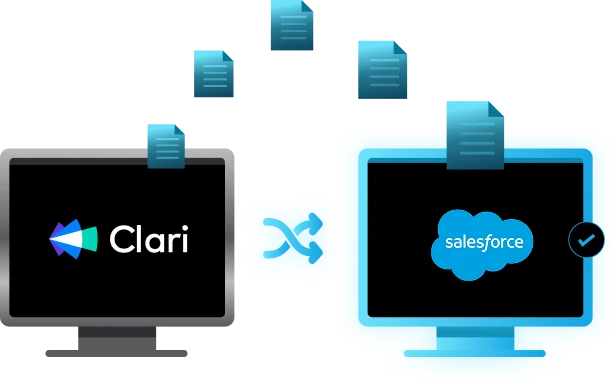
Conceptual data flow overview here

Clari pulls Salesforce data for accounts, contacts, and opportunities, then builds pipeline views and forecasts. Optional writeback pushes approved field edits from Clari into Salesforce, using API access and permissions.

Most teams start with one way sync from Salesforce to Clari for reporting. Two way sync adds controlled writeback for select fields, while Salesforce remains the primary system of record.

Updates trigger when Salesforce fields change or when users submit edits in Clari. Mapping rules decide which opportunity stages, amounts, and dates refresh, and which fields can write back safely.

If both systems change the same field, Salesforce validation and last update timing guide the outcome. Exceptions are logged for admins, who can correct data and rerun sync quickly afterward.

better-contact-lead-management-tab-img

Why Choose Folio3 For Clari Salesforce Integration

Deep Clari Expertise

We've implemented Clari + Salesforce 35+ times across industries. We know forecast gotchas and writeback pitfalls. We don't learn in your org.

Data Governance First

We design sync rules respecting Salesforce field ownership. Your reports stay accurate. Forecast integrity is protected.

Revenue Operations Mastery

We've worked with forecast teams, sales leaders, and finance ops. We understand what matters: forecast accuracy, data trust, and clean exports.

Your System, Your Rules

Salesforce remains the system of record. Clari is the forecast engine. You control what syncs and when. Complete control, always.

How We Implement Clari Salesforce Integration

Discovery
Architecture

Audit Salesforce setup comprehensively. Define all field mappings and establish sync rules.

Integration
Build

Build complete sync logic. Configure all field mappings. Test with opportunities data.

Production
Deployment

Deploy with a pilot program. Monitor performance metrics. Support for 30 days.

User
Training

Document all workflows comprehensively and conduct thorough live training sessions for users.

Performance
Tuning

Review sync logs thoroughly. Adjust refresh frequency appropriately. Optimize all field mappings.

Ongoing
Support

Monitor data quality continuously. Handle sync exceptions promptly. Document all changes made.

Clari Salesforce Integration Use Cases by Role

For Sales Leaders: Defensible Forecast Calls

The sales leader needs a forecast they can defend. They review Salesforce opportunity changes and want context inside Clari.

For Revenue Operations: Field Control & Validation

RevOps owns field definitions and validation. They want Clari views to match Salesforce layouts and respect permissions.

For Sales Managers: Deal Visibility Without Manual Review

Sales managers open Clari and see Salesforce stage changes, activity signals, and risk flags automatically.

For Finance: Accurate Revenue Planning

Finance uses the same pipeline numbers for quarterly planning. Clari syncs Salesforce opportunity data for accuracy.

For Sales Reps: Less Manual Data Entry

Reps update the opportunity stage in Salesforce once. Clari reads the same data. No switching platforms needed.

For Sales Operations: Predictable Workflows

Sales ops sets up sync once per Salesforce org. New forecast cycles use the same mappings.

What Data Syncs in Clari Salesforce Integration Scope

Clari relies on Salesforce as the pipeline source, so object scope and field mapping matter. Before setup, decide which teams need read access, which fields allow writeback, and how often updates should run to match your forecast cadence each week.

sales-cloud

Objects synced

Salesforce accounts, contacts, users, and opportunities commonly sync into Clari for pipeline views. Opportunity line items or custom objects may require added mapping, depending on your Salesforce data model today.

service-cloud

Activity data

Clari can use Salesforce tasks and events to show engagement signals. If your org logs email and meetings through Groove or another tool, confirm they land on the right records.

marketing-cloud

Custom fields

Custom opportunity fields can appear in Clari layouts when included in the CRM field set and mapped. Keep data types consistent, and avoid text fields that do not render well.

How to Step by Step Integrate Clari Salesforce

Setting up Clari with Salesforce starts by securing API access and choosing a Salesforce integration user. Next, map the opportunity fields your forecast depends on, then test sync results. Plan a short pilot before rolling changes to all teams companywide.

Follow these steps to connect both systems:

  1. In Salesforce, create an integration user with API access, read permission on required objects, and edit permission only for fields you want written back. Record the user profile and login.
  2. In Clari admin settings, select Salesforce as your CRM connection and authorize with the integration user. Choose the correct Salesforce production or sandbox org and confirm the connected status screen.
  3. Set your object scope: accounts, contacts, users, and opportunities at minimum. Map key opportunity fields like stage, amount, close date, forecast category, and any custom fields used in reviews weekly.
  4. Decide which fields are read only and which allow writeback from Clari to Salesforce. Set refresh timing, then run an initial sync and verify sample opportunities in both systems first.
  5. Review sync logs for errors from Salesforce validation rules, required fields, or picklist mismatches. Adjust mappings, retrigger sync, and document governance for field changes so RevOps keeps control moving forward.

Limitations and configuration considerations:

  • Salesforce validation rules can block Clari writeback updates at save.
  • Picklist values must match across both systems for sync success.
  • Restricted fields need explicit permission for the integration user only.
  • Large orgs can require staged backfills to avoid API limits.
  • Field renames in Salesforce require remapping in Clari layouts promptly.

Improve forecast accuracy with shared Clari Salesforce data

Increase resolution speed with shared customer records
Our Insights

Frequently Asked Questions (FAQs)

Connect Clari to Salesforce with an integration user, map opportunity fields, and set refresh timing. Use controlled writeback only for approved fields and teams first.
Most deployments sync accounts, contacts, users, and opportunities so pipeline views stay current. Add line items or custom objects only when your model requires them.
Yes, when you allow writeback for selected fields and grant permission to the integration user. Salesforce validation still applies, so test required fields and picklists.
Set sync timing in Clari to match forecast cadence and Salesforce API limits. Monitor sync logs for failures so missed updates are corrected before reviews.
Common issues include picklist mismatches, missing field permissions, and validation rule failures. Fix them by aligning values, updating access, and rerunning a test sync cycle.