AI Want to work smarter with AI? See how Agentforce fits your business.

Get Started

Salesforce Health Cloud EHR Integration

Stop Losing Money to Disconnected Healthcare Systems

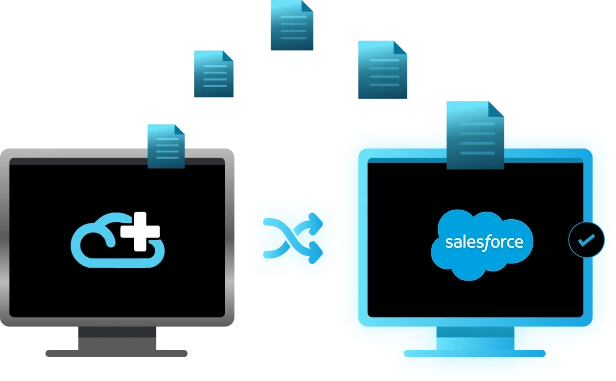
Your EHR and Salesforce don't talk. Your team pays for it—$200K+ annually in wasted staff time, billing errors, and missed revenue. We integrate Salesforce Health Cloud with your EHR so your clinical, billing, and operations teams work from one source of truth. No more duplicate entries. No more care gaps. No more revenue leakage.

EHR-integration

Common Challenges with EHR and Salesforce Integration

Healthcare organizations that run both systems independently face predictable friction. Here's what we see, and how a proper EHR Salesforce Health Cloud integration fixes it.

Clinical Data Lives in Two Places

Challenges

Your care teams work in Salesforce Health Cloud. Clinical operations live in your EHR. Neither system sees what the other does. Patient context gets researched twice. Care history gets scattered.

Solution

  • Care teams update Health Cloud, clinical ops don't know
  • EHR patient changes don't reach care coordinators
  • No single patient view across systems
  • Manual email updates become the sync method

Real-Time Data Sync

Challenges

An EHR Salesforce Health Cloud integration automatically syncs patient data, care plans, and clinical records between systems. Updates in one platform instantly appear in the other. No manual entry. No delay.

Solution

  • Bi-directional patient and account sync
  • Care plans automatically map to clinical encounters
  • Activity logs stay unified across both systems
  • Follow-up dates sync automatically from EHR

Manual Clinical-to-Billing Workflow

Challenges

A patient completes care in Health Cloud. Billing team has to manually create an invoice in your EHR. Days pass. Details get lost. Revenue doesn't match clinical records. Payment processing gets delayed.

Solution

  • Care team completes encounter, sends email to billing
  • Billing re-enters encounter details into EHR manually
  • Errors creep in during re-entry
  • Revenue calculations get disputed

Automated Clinical-to-Billing Mapping

Challenges

When care completes in Salesforce Health Cloud, the EHR Salesforce integration automatically creates a matching billing record in your EHR with all clinical details pre-populated. Billing sees the record instantly. No re-entry. No errors.

Solution

  • Closed care encounters auto-convert to billing records
  • Patient details, service codes, and charges sync automatically
  • Revenue data matches across systems
  • Processing time drops from hours to minutes

Connect your EHR systems with Salesforce Health Cloud today.

Connect your EHR systems with Salesforce Health Cloud today.

What You Can Achieve With EHR Salesforce Integration

Unified Patient View

Clinical teams see patient history in Salesforce Health Cloud. Billing teams see clinical events in your EHR. One source of truth means faster decisions and fewer mistakes.

Faster Patient Access

No scheduling delays. No duplicate patient entries. No back-and-forth phone calls. Patients move through intake and into care without friction.

Accurate Revenue Capture

Billing calculations pull real data directly from your EHR through Salesforce Health Cloud integration. No disputes. No reconciliation headaches. Revenue cycle and clinical teams agree on numbers.

Automated Referral Workflows

Your EHR Salesforce Health Cloud integration automatically creates referrals when care requirements trigger. Care teams know what to work. Referrals don't slip.

Complete Compliance Audit Trail

Every clinical update, patient interaction, and billing event syncs between systems automatically. Regulators get the complete audit trail they need without manual data gathering.

Reduced Administrative Overhead

Your administrative team stops re-entering data. One integration replaces hours of manual sync work per week. Staff focus on patient care instead of managing spreadsheets.

How EHR Salesforce Health Cloud Integration Helps Your Business

The right EHR Salesforce Health Cloud integration connects your entire organization—from clinicians scheduling appointments in Health Cloud to billing managing revenue in your EHR. Here's what a mature integration delivers.

Bi-Directional Patient and Account Syncing

EHR and Salesforce Health Cloud records sync bidirectionally. Phone, email, address auto-populate. Eliminates duplicates, keeps data fresh.

Clinical activities sync automatically from Salesforce Health Cloud to EHR. Billing sees complete clinical history without re-entry.

Maps custom fields between systems. Specialty-specific requirements, clinical rules, conditional logic all stay intact.

Integration knows which system is source of truth. Stale records never overwrite recent clinical updates.

Closed clinical encounters automatically create matching billing records. Clinical details pre-populate. No manual re-entry.

Clinical referral dates automatically create patient follow-ups. Care teams know what's coming due. No referrals slip.

How EHR Salesforce Health Cloud Integration Helps Your Business

Driving Change for Growing Companies with Salesforce Services

Majorkey

We used Folio3 over the last 3+ years for many projects, including org merges, complicated workflows and enhancements. Folio3 is was very detailed in the work. They are experts. They can explain complicated tasks so even the novice in the room can understand. Appropriate and reasonable timelines are assigned so that there are no issues with any tasks for transition. The project closed without any hang ups or hold ups and we continue to do enhancements on the application with Folio3.

testimonial-sunhero-logo

Sunhero

Folio3 did a great job in scoping the request and keeping communication going throughout the task
This was a very ambiguous request and they managed to troubleshoot the issue and explore different options. I would hire them again

Why Choose Folio3 for Salesforce Health Cloud EHR Integration

Deep Integration Expertise

40+ health systems with Epic, Cerner, Athena, NextGen. We know where data breaks.

Data Governance First

Health Cloud stays system of record. EHR enriches. You control what syncs.

Post-Launch Support

Monitor integration for 30 days. Catch anomalies early. Optimize clinical workflows.

Your System, Your Rules

We build around your actual workflows. Not a template.

Why Choose Folio3 for Salesforce Health Cloud EHR Integration

How We Build Your Salesforce Health Cloud EHR Integration

Discovery
& Audit

Evaluate EHR and Health Cloud setups. Map all relevant clinical data fields.

Integration
Architecture

Design sync logic. Define conflict resolution rules. Create field mappings.

Integration
Build

Build integration. Test thoroughly with real clinical data. Validate all syncs.

Production
Deployment

Deploy with pilot first. Monitor performance. Gather feedback before rollout.

User
Training

Document workflows. Conduct live training for clinical, billing, operations teams.

Ongoing
Support

Monitor integration continuously. Handle sync exceptions. Optimize clinical workflows.

Salesforce Health Cloud EHR Integration Use Cases

Real-world scenarios where an EHR Salesforce Health Cloud integration transforms how healthcare organizations operate.

For Clinical Operations - Faster Patient Access

Pull EHR availability metrics into Health Cloud dashboards. See provider status, patient queue, appointment gaps. Report real signals to leadership instead of guesses.

For Care Teams - Account-Based Strategy

Identify patient needs and coverage gaps within target populations. Enrich profiles with clinical history. Sync care hierarchies while maintaining structure.

For Administrative Leaders - Reduced Manual Work

Eliminate manual re-entry of clinical details into billing systems. Auto-generate claims from closed encounters. Clinical details pre-populate. Save 5+ hours weekly.

For Data Quality - Data Quality Control

Fill gaps automatically when EHR or Health Cloud records are incomplete. Sync missing phone, address, insurance data bidirectionally. Improve data quality continuously.

For Compliance and Finance - Audit Trail Visibility

Maintain detailed records of every clinical update, billing event, patient interaction. Keep complete audit trails. Simplify regulatory compliance reporting.

For Medical Leadership - Honest Forecasting

Populate Health Cloud feeds with real clinical signals from encounters and diagnoses. Forecast based on actual patient outcomes, clinical behavior, not assumptions.

What Data Syncs Between EHR and Salesforce Health Cloud Systems

Keep your systems in sync with real-time clinical and operational data.

Clinical & Patient Records

Patient demographics, diagnoses, procedures, medications, and clinical notes sync bidirectionally. Updates in either system automatically propagate to both platforms. Patient records stay current everywhere in real time.

Appointment & Scheduling Data

Appointment scheduling, provider availability, room status, and patient confirmations sync from EHR to Salesforce Health Cloud automatically. Scheduling changes reflect instantly across systems.

Billing & Revenue Data

Clinical events, diagnosis codes, procedure codes, and billing status flow from EHR into Salesforce billing workflows automatically. Revenue cycle accelerates. Coding accuracy improves. Claims submit faster.


How to Step-by-Step Integrate EHR and Salesforce Health Cloud

Connecting your EHR to Salesforce Health Cloud enables bidirectional clinical data sync, eliminating manual record entry and keeping patient information aligned. Here's how to set up the integration.

How to Connect:

  1. Generate API keys in both your EHR and Salesforce Health Cloud. Grant necessary permissions for read/write access between systems.
  2. Define which EHR fields sync to Salesforce Health Cloud. Choose sync direction (one-way or bidirectional) per field.
  3. Set real-time, hourly, or daily sync schedules based on workflow needs. Test in sandbox first.
  4. Define conflict resolution rules. Decide which system is source of truth when data conflicts occur.
  5. Test with small user group. Monitor sync logs for errors. Validate accuracy before production.

The Key Benefits

  1. Eliminates manual data entry between EHR and Salesforce.
  2. Keeps patient records current across both systems.
  3. Automates clinical workflow execution and coordination.
  4. Reduces data quality issues and duplicate records.

Eliminate manual clinical entry with unified EHR and Salesforce Health Cloud operations.

Eliminate manual clinical entry with unified EHR and Salesforce Health Cloud operations.
Our Insights

Frequently Asked Questions (FAQs)

In your EHR admin console, go to Settings, open Integrations, choose Salesforce Health Cloud, then authorize with OAuth. Use a Health Cloud user with proper clinical permissions so sync runs securely.

EHR integrations can sync patient demographics, diagnoses, procedures, medications, scheduling data, and clinical activities when configured. Exact coverage depends on your EHR system, Salesforce objects, and field mappings selected.

Use matching rules based on patient MRN and date of birth before sync. Map identifiers consistently across systems, then assign ownership so Salesforce records stay unique and accurate.

Yes, create custom fields in both your EHR and Salesforce Health Cloud, then link them in field mappings. Bidirectional sync works for all linked clinical values automatically.

Check sync settings for Clinical Activities and confirm mapped fields are correct. Verify the connected Salesforce Health Cloud credential has required permissions. Run test sync and review logs.

Yes, all data in transit is encrypted. Access is role-based and audit trails log every transaction automatically. Your Salesforce Health Cloud EHR integration meets HIPAA requirements by default.